
Slow Cooker Recipes: Easy Meals, Less Effort!
Family-friendly dishes for busy people — quick prep, delicious results.
Grab yours for $4Lasagna with Ricotta is a timeless Italian classic that transforms simple ingredients into a masterpiece of flavor and texture.
This dish offers a harmonious blend of creamy ricotta, savory meat sauce, and perfectly cooked noodles.
Each bite delivers a comforting warmth that evokes the essence of Italian home cooking.
Whether enjoyed as a comforting family meal or a show-stopping dinner party centerpiece, this lasagna promises satisfaction.
The layers of cheesy perfection and rich tomato sauce create an unforgettable culinary experience.
Discover the joy of making and savoring this deliciously layered dish in your own kitchen.
The History and Cultural Significance
• Lasagna with Ricotta traces its origins to Ancient Rome, where it was originally created by layering pasta with meat and cheese.
• The dish evolved over decades as tomatoes became a staple ingredient in Italian cuisine, eventually becoming the beloved version we know today.
• In Italian culture, this dish traditionally appears at family gatherings and festive celebrations, symbolizing warmth and togetherness.
• While many variations exist across different regions, the authentic version maintains the use of ricotta cheese, setting it apart from imitations.




Recipe Overview
Nutritional Information (per serving)
Essential Equipment Guide
Baking Dish: A ceramic or glass baking dish is crucial for even cooking and browning. Alternatives like metal pans can work but may require adjustments in cooking time.
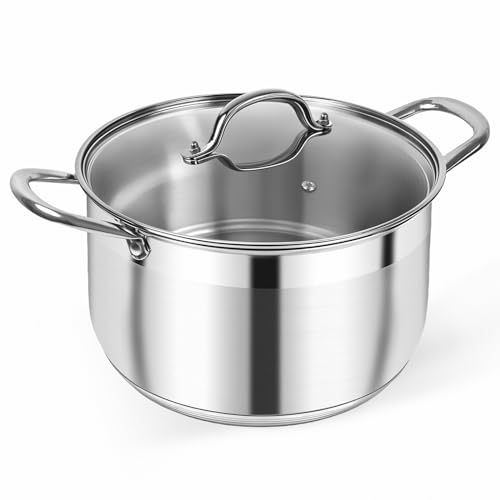
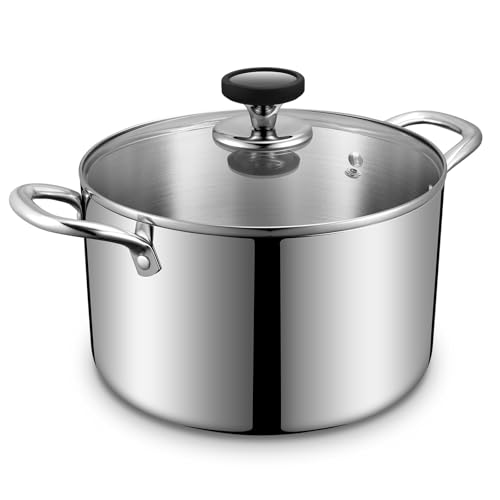
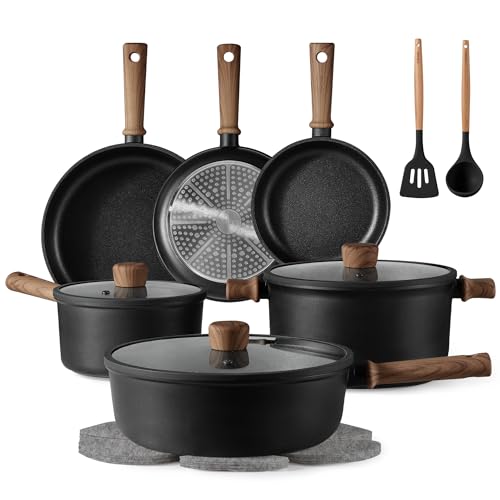
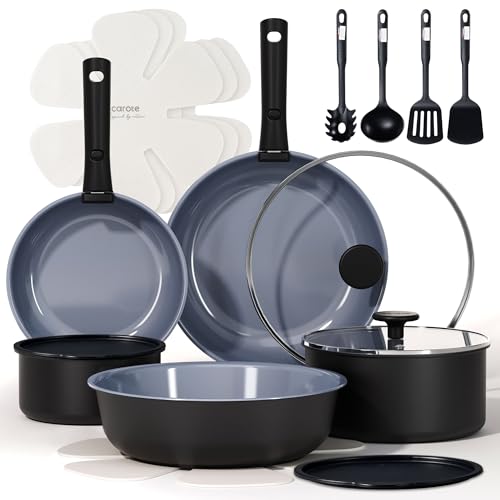
Large Saucepan: Essential for preparing the meat sauce, a heavy-bottomed saucepan ensures even heat distribution and prevents burning. Look for one with a sturdy handle for easy maneuvering.
Slotted Spoon: This tool helps in layering the meat sauce without excess liquid, which is key to preventing a soggy lasagna. A ladle can be an alternative but may not offer the same precision.



Ingredients
For the Base
|
|
| Amount | Ingredient | Notes |
|---|---|---|
| 12 sheets | lasagna noodles | pre-cooked for convenience |
For the Sauce
| Amount | Ingredient | Notes |
|---|---|---|
| 1 pound | ground beef | adds savory depth |
| 2 cups | tomato sauce | rich flavor |
| 1 medium | onion | finely chopped for sweetness |
| 3 cloves | garlic | minced for aroma |
Cheese Layer
| Amount | Ingredient | Notes |
|---|---|---|
| 2 cups | ricotta cheese | creamy texture |
| 2 cups | mozzarella cheese | grated, melty goodness |
| 1 cup | Parmesan cheese | grated for sharpness |
Seasonings
| Amount | Ingredient | Notes |
|---|---|---|
| 1 teaspoon | dried basil | herbal notes |
| 1 teaspoon | dried oregano | earthy flavor |
| 1 teaspoon | salt | enhances taste |
| 1 teaspoon | black pepper | adds mild heat |
Preparation Methods
Sautéing: This method involves cooking onions and garlic until they are soft and fragrant. It enhances the sweetness of the onions and the aroma of the garlic, creating a flavorful base for the sauce. Use medium heat to avoid burning.
Layering: Proper layering is crucial for lasagna. Start with a thin layer of sauce to prevent sticking, followed by noodles, ricotta, and mozzarella. Repeat the layers for even distribution of flavors.
Simmering: Allowing the sauce to simmer gently reduces liquid and concentrates flavors. A low simmer for about 20 minutes will develop a rich, robust sauce. Stir occasionally to prevent sticking.



Step 1: Prepare Ingredients
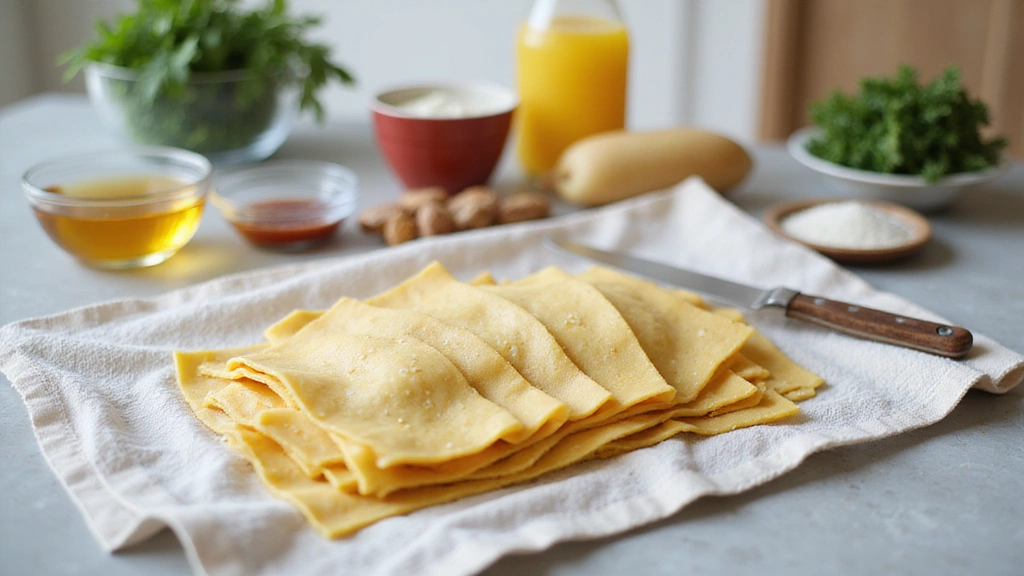
Begin by gathering all ingredients and equipment needed for the recipe.
Measure out the spices and cheeses, ensuring everything is ready for the cooking process.
Pre-cook the lasagna noodles according to package instructions until al dente.
Set them aside on a clean towel to prevent sticking.
Step 2: Sauté Onions and Garlic
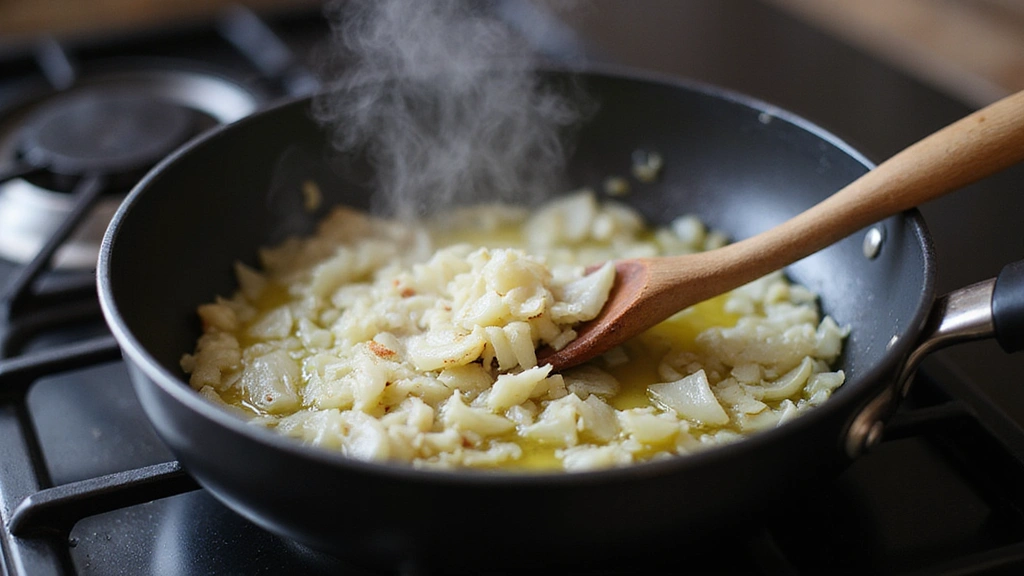
Heat a large saucepan over medium heat and add a splash of olive oil.
Add the chopped onions and minced garlic to the pan.
Cook until the onions are translucent and the garlic is fragrant.
Be careful not to burn the garlic, as it will become bitter.




Step 3: Cook the Meat
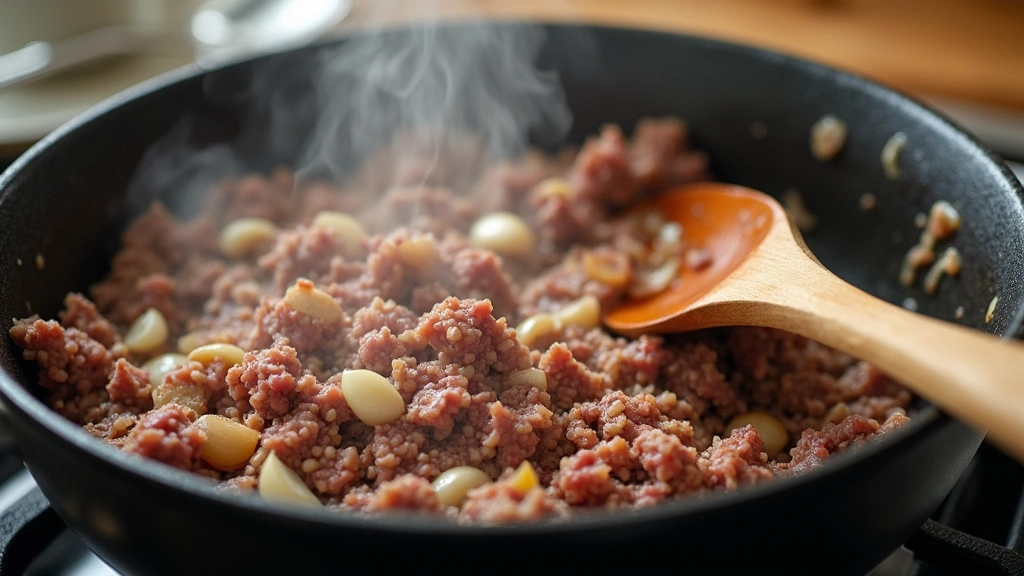
Add the ground beef to the sautéed onions and garlic, breaking it up with a wooden spoon.
Cook until the meat is browned and no longer pink.
Drain any excess fat from the pan carefully.
Ensure the meat is evenly cooked and well combined with the onions and garlic.




Step 4: Prepare the Sauce
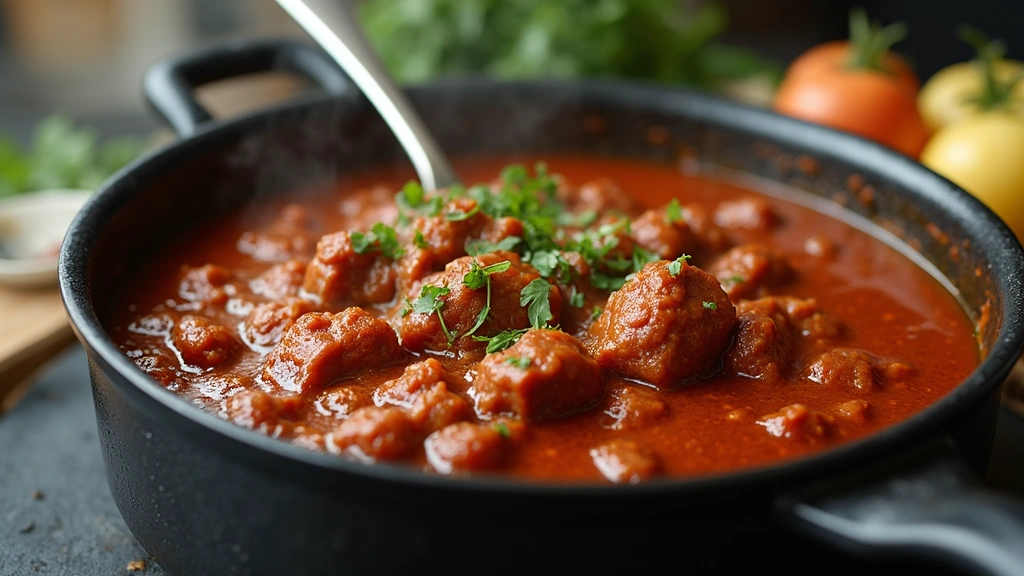
Pour the tomato sauce into the pan with the cooked meat.
Stir in the dried basil, oregano, salt, and black pepper.
Bring the mixture to a gentle simmer and let it cook for 20 minutes.
Stir occasionally until the sauce thickens and flavors meld.


Step 5: Mix Ricotta and Parmesan
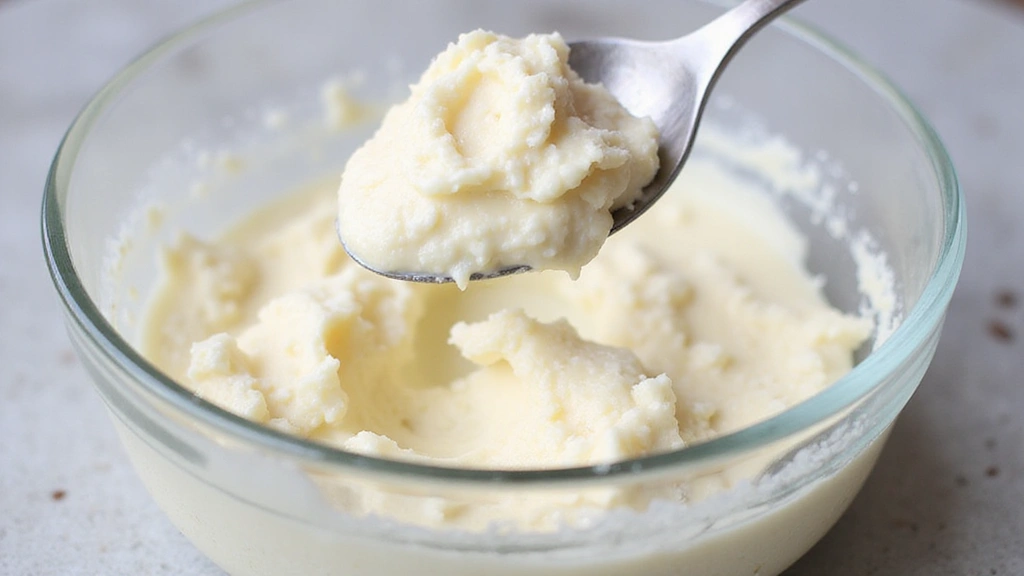
In a separate bowl, combine the ricotta and half of the grated Parmesan cheese.
Mix until smooth and well combined.
Add a pinch of salt and pepper to taste.
Set aside for the layering process.




Step 6: Layer the Lasagna
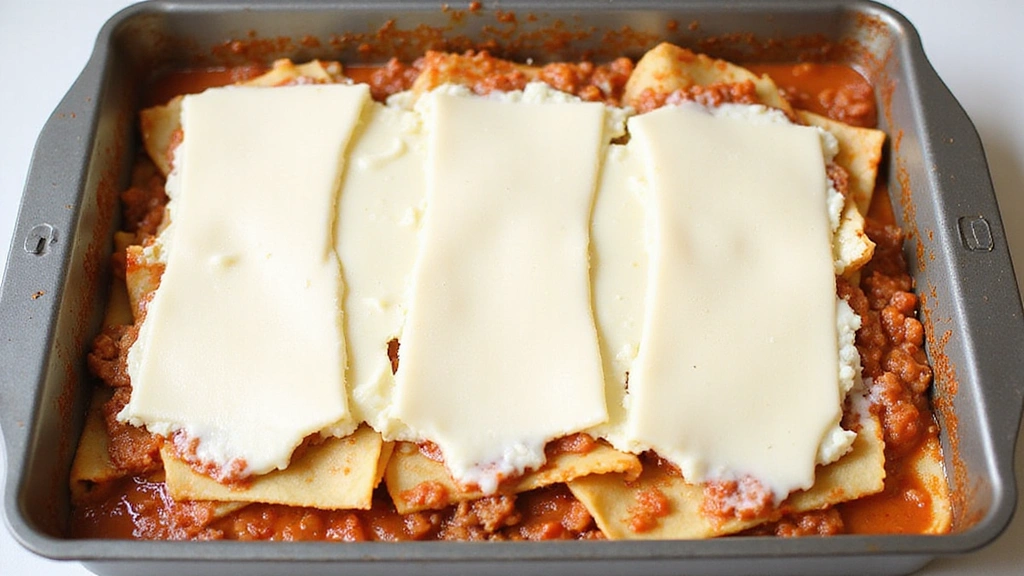
Spread a thin layer of meat sauce at the bottom of the baking dish.
Place a layer of lasagna noodles over the sauce, slightly overlapping.
Spread a layer of the ricotta mixture, followed by a generous sprinkle of mozzarella.
Repeat the layers, finishing with a top layer of noodles and remaining sauce.



Step 7: Top with Cheese
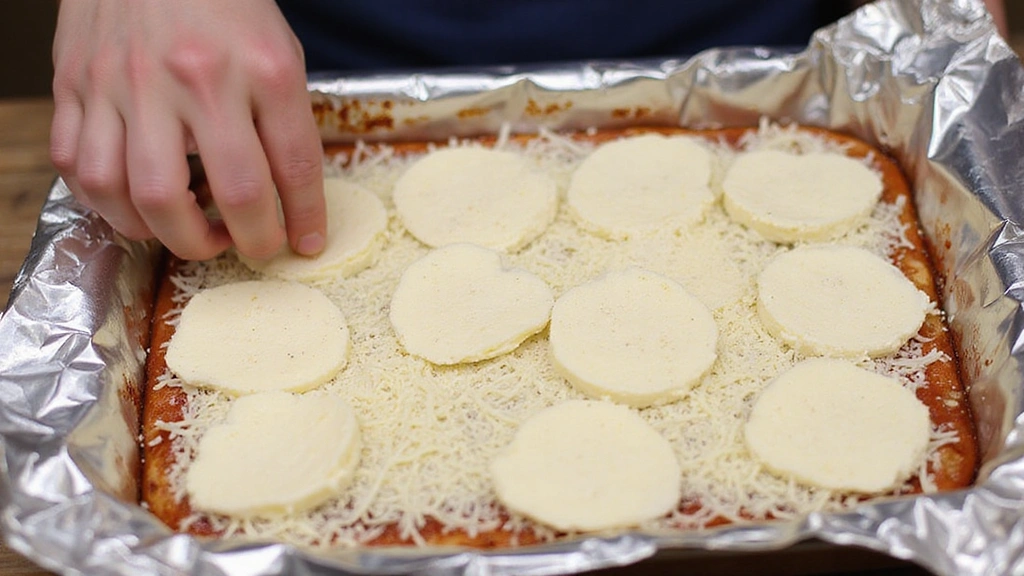
Sprinkle the remaining mozzarella and Parmesan cheese over the final layer of sauce.
Ensure the cheeses cover the entire surface for even browning.
Press down gently to compact the layers.
Cover with aluminum foil for initial baking.
Step 8: Bake the Lasagna
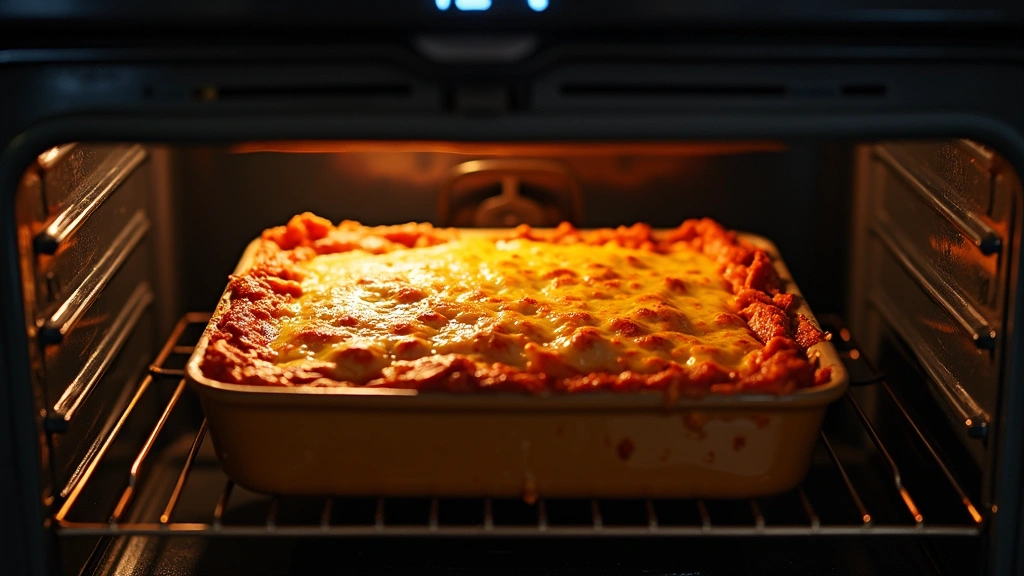
Preheat the oven to 375°F (190°C).
Place the covered baking dish in the oven and bake for 30 minutes.
Remove the foil and bake for an additional 15 minutes until the cheese is bubbly and golden brown.
Allow the lasagna to cool slightly before serving.


Critical Timing and Temperature Guide
Baking: Bake at 375°F (190°C) for a total of 45 minutes. Cheese should be bubbly and golden brown. Avoid opening the oven frequently to maintain consistent temperature.
Simmering Sauce: Simmer sauce for 20 minutes on low heat. Look for a thickened consistency and rich aroma. Stir occasionally to prevent burning.
Cooling: Allow lasagna to cool for 10 minutes before slicing. This helps set the layers and makes serving easier. Avoid cutting too soon to prevent collapsing layers.


Pro Tips for Lasagna with Ricotta
• Ingredient Selection: Opt for high-quality ricotta and fresh mozzarella for the creamiest texture and best flavor.
• Preparation Secret: Let the ricotta mixture sit for 10 minutes before layering; this helps the flavors meld.
• Temperature Management: Ensure all ingredients are at room temperature before assembly to promote even baking.
• Texture Enhancement: Use a slotted spoon for the meat sauce to control moisture and prevent soggy layers.
• Flavor Layering: Add a pinch of nutmeg to the ricotta mixture for a subtle, warming undertone.
• Make-Ahead Strategies: Prepare the lasagna up to the baking step and refrigerate overnight. Increase baking time by 10 minutes if chilled.
• Restaurant-Quality Finishing Touches: Garnish with fresh basil leaves and a drizzle of olive oil before serving.
• Equipment Optimization: Preheat the baking dish slightly in the oven before adding layers to jumpstart even cooking.



Troubleshooting Common Issues
• Texture Too Dense: Overcooked noodles or too much sauce can cause density. Ensure noodles are al dente and control sauce moisture.
• Flavors Unbalanced: If the flavor is too acidic, add a pinch of sugar to the sauce to balance. Check seasoning levels.
• Cheese Won't Melt Properly: Use freshly grated cheese instead of pre-shredded for better melting.
• Soggy Lasagna: Use a slotted spoon for sauce layering to control moisture. Bake uncovered for the last 15 minutes to evaporate excess liquid.
• Lasagna Falls Apart: Allow to cool for 10 minutes before slicing to let layers set. Ensure even layering during assembly.
• Bland Ricotta Layer: Season ricotta with salt, pepper, and a touch of nutmeg to enhance flavor.




Variations and Regional Differences
• Neapolitan-Style Lasagna: Uses meatballs, sausage, and hard-boiled eggs for a hearty, festive variation.
• Vegetarian Lasagna: Replaces meat with layers of grilled vegetables like zucchini and eggplant, adding a fresh, earthy flavor.
• Bolognese Lasagna: Features a rich, slow-cooked meat sauce with a touch of milk for creaminess, typical of Bologna.
• Seafood Lasagna: Incorporates shrimp and crab for a coastal twist, often with a white sauce instead of tomato.


Food Science Behind the Recipe
• Maillard Reaction: The browning of cheese during baking is a result of this reaction, creating complex flavors and aromas.
• Starch Gelatinization: Occurs as noodles absorb moisture and heat, becoming tender and cohesive with other layers.
• Emulsion Creation: The blending of water and fats in cheese and sauce forms a stable emulsion, ensuring a creamy texture.



Frequently Asked Questions
What's the most common mistake people make when preparing lasagna with ricotta? Overloading each layer can lead to a soggy dish. Balance the amount of sauce and cheese for optimal texture.
Can I freeze lasagna with ricotta? Yes, assemble the lasagna without baking, wrap tightly, and freeze for up to three months. Thaw overnight before baking.
How do I prevent lasagna noodles from sticking? Rinse cooked noodles under cold water and lay them on a towel to dry slightly before assembling.
Is it possible to make lasagna gluten-free? Absolutely, use gluten-free lasagna noodles and ensure other ingredients are gluten-free.
What can I use instead of ricotta cheese? Cottage cheese or a blend of cream cheese and sour cream can be used as substitutes.
How can I add more vegetables to my lasagna? Layer in spinach, mushrooms, or zucchini between the noodles and ricotta for added nutrients.
Can I use fresh pasta for lasagna? Yes, fresh pasta can be used and typically requires less cooking time, enhancing the dish's texture.
Serving and Presentation Guide
• Traditional Presentation: Serve lasagna in squares or rectangles, garnished with fresh basil leaves and a drizzle of olive oil.
• Family-Style Serving: Present the entire baking dish at the table, allowing guests to serve themselves, fostering a communal atmosphere.
• Individual Portions: Use small ramekins or cocottes to bake and serve single-serving lasagnas for elegant plating.
• Layered Plate Presentation: Place a slice of lasagna on a bed of arugula or spinach for a colorful, fresh contrast.


Conclusion

Creating Lasagna with Ricotta is a rewarding culinary experience that combines rich traditions with delightful flavors.
Each layer of this dish tells a story of comfort and care, making it a cherished favorite for any occasion.
We hope this recipe inspires you to bring a taste of Italy to your table and share it with loved ones.
Embrace the joy of cooking and enjoy every delicious bite of your homemade lasagna.